District Spotlight
Seattle's Graduation Rate Rose 10.5 Points, Then Fell for Two Years
Seattle's four-year graduation rate rose from 77.5% in 2016 to 88.0% in 2023, then fell to 86.1% in 2025.
Data-Driven Education Journalism for the Evergreen State
Education News & Data
Local education reporting from every corner of Washington, grounded in Washington Department of Education data.
After seven years as an assistant superintendent in Clarkston, he wanted a smaller district with strong schools and a community that shows up for them. He is starting with a listening tour and a goal of turning steady enrollment into growth.
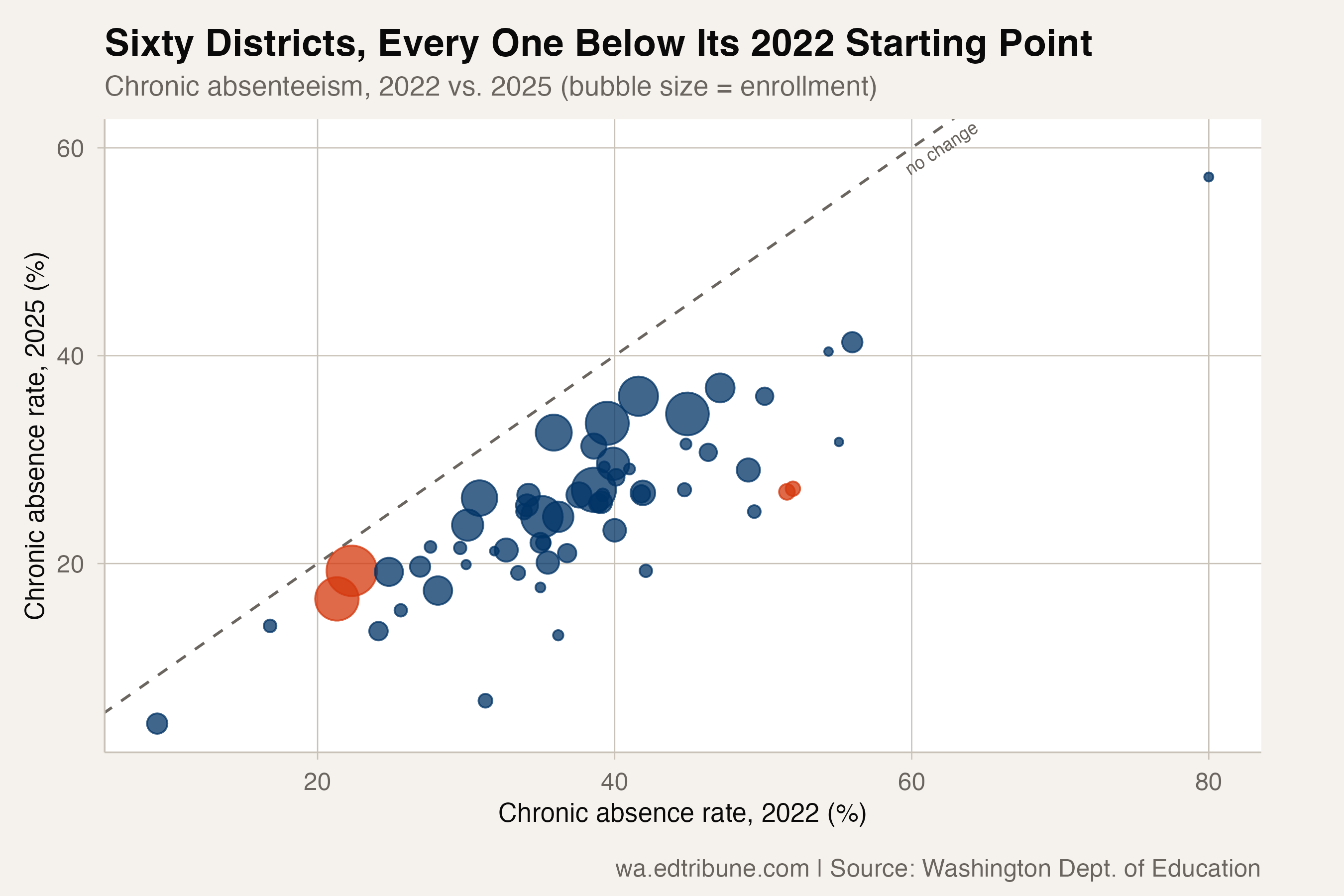
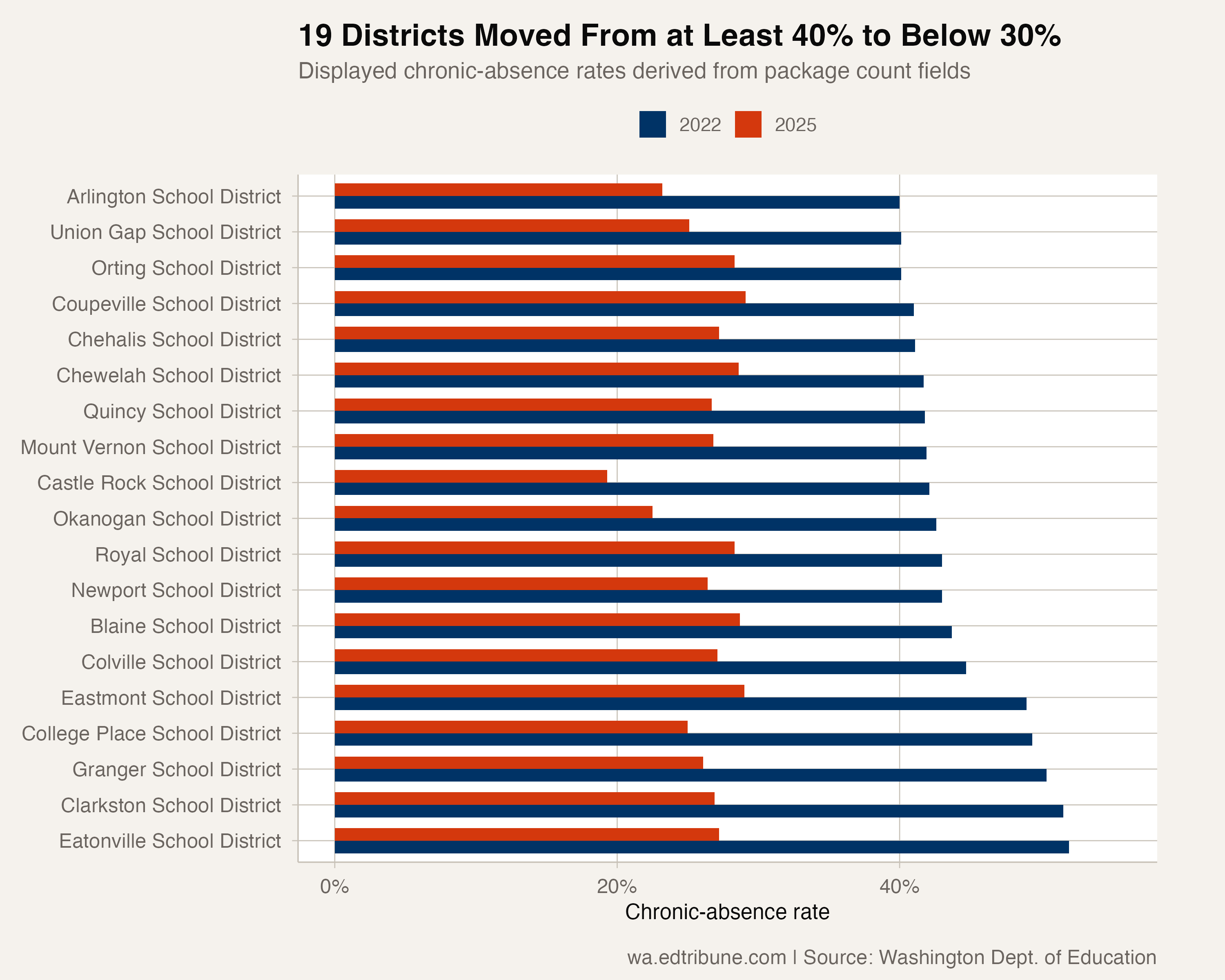
Castle Rock School District cut its chronic absenteeism rate from 42.1% in 2022 to 19.3% in 2025, with improvements across five major reported student groups.
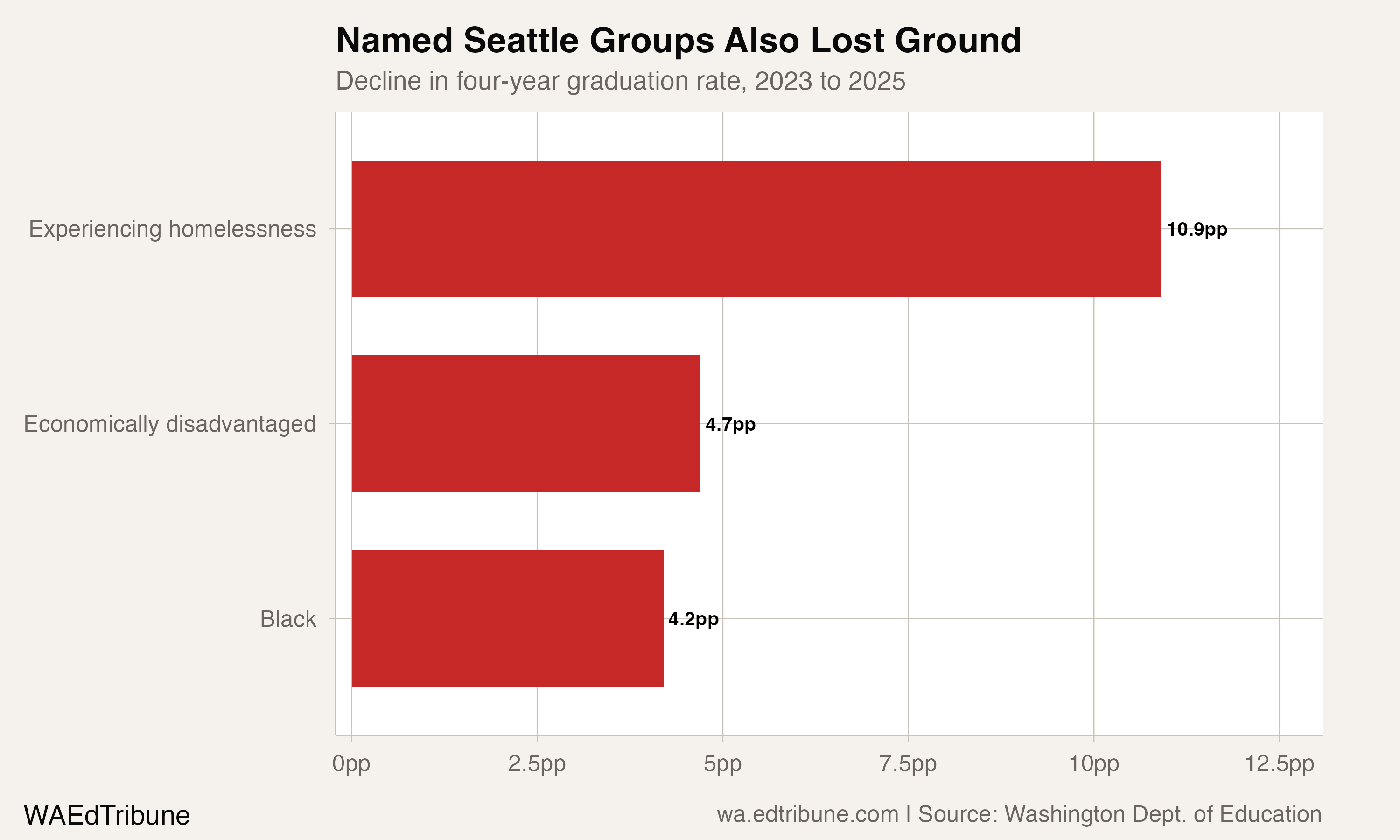
Bellevue School District's four-year graduation rate fell to 87.7% in 2024-25, down nearly seven points from its 2020-21 peak. Students experiencing homelessness fell furthest among the published subgroups.
Tacoma's four-year graduation rate rose from 85.0% to 91.4% between 2016 and 2025, and all 14 subgroups with data in both years improved.
Seattle's four-year graduation rate rose from 77.5% in 2016 to 88.0% in 2023, then fell to 86.1% in 2025.
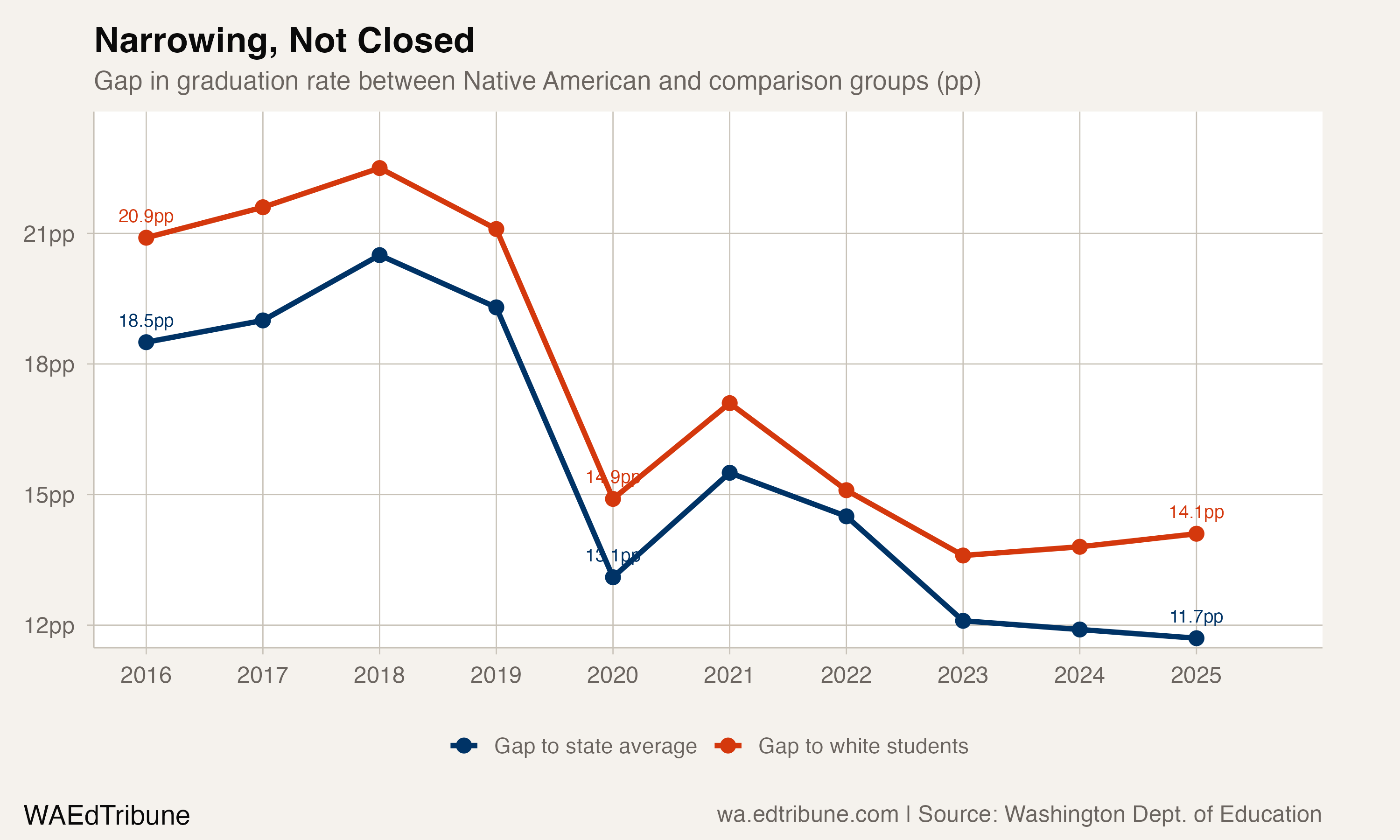
Native American students posted the largest graduation rate gain of any racial or ethnic group in Washington since 2016. Much of the 10.3-point jump came during COVID.
Washington's chronic absenteeism rate fell one tenth of a point in 2025, but 57 districts enrolling 500 or more students cut their rate in each of the past three years.
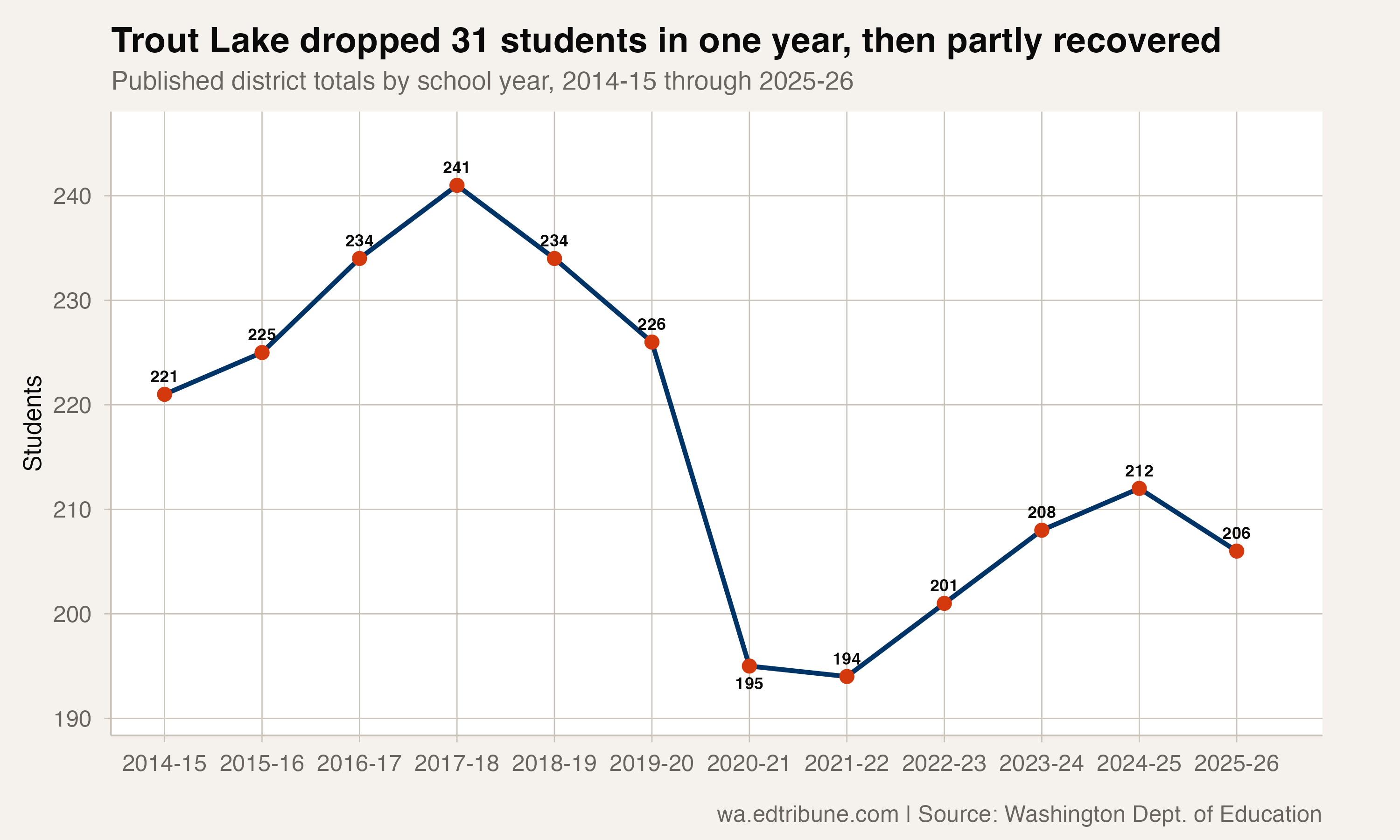
Doug Dearden returns to lead Trout Lake, watching high school enrollment as students weigh Running Start, online school and work-based programs.
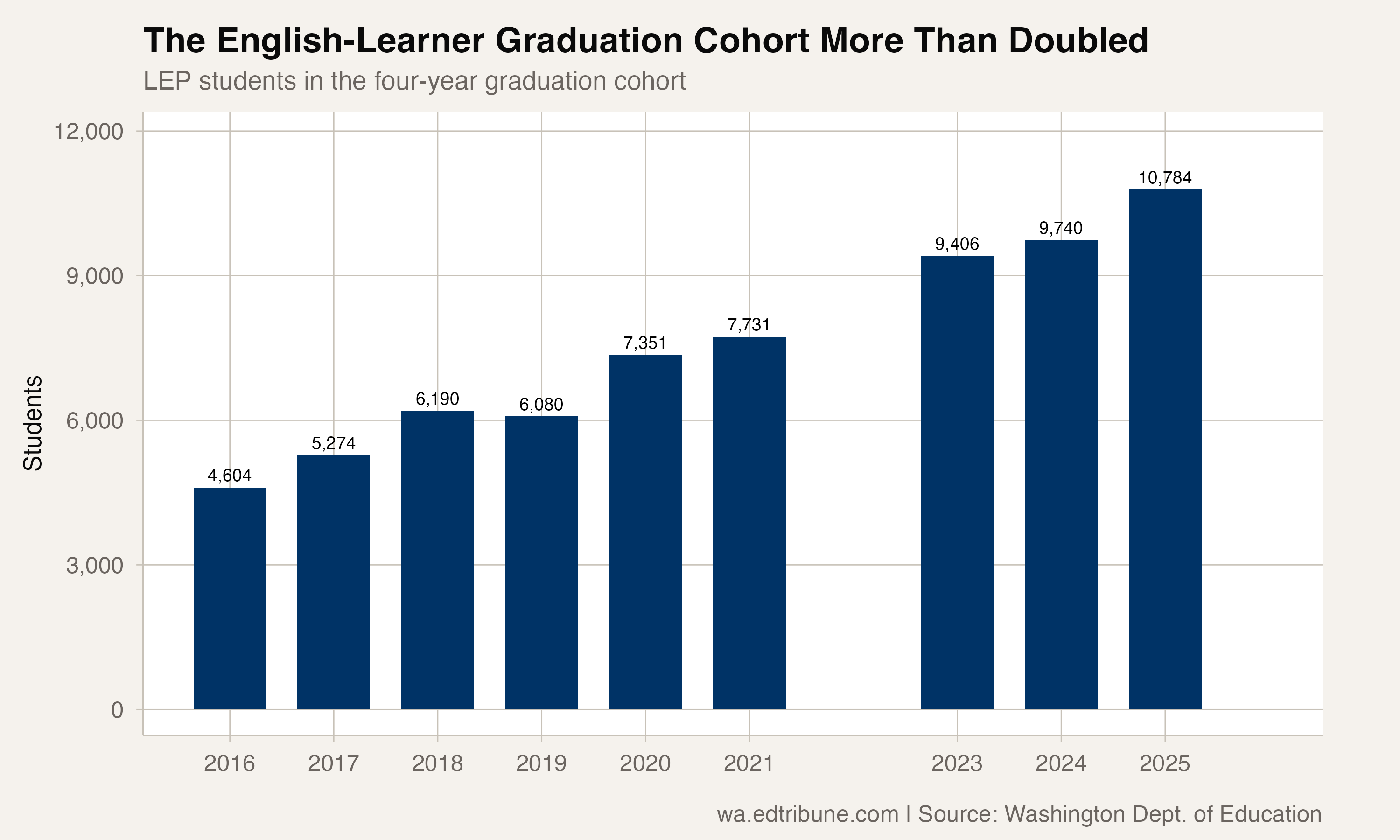
Washington's English-learner four-year graduation rate fell 3.2 points from its 2022-23 peak to 2024-25 as the LEP cohort grew 134.2% from 2015-16.
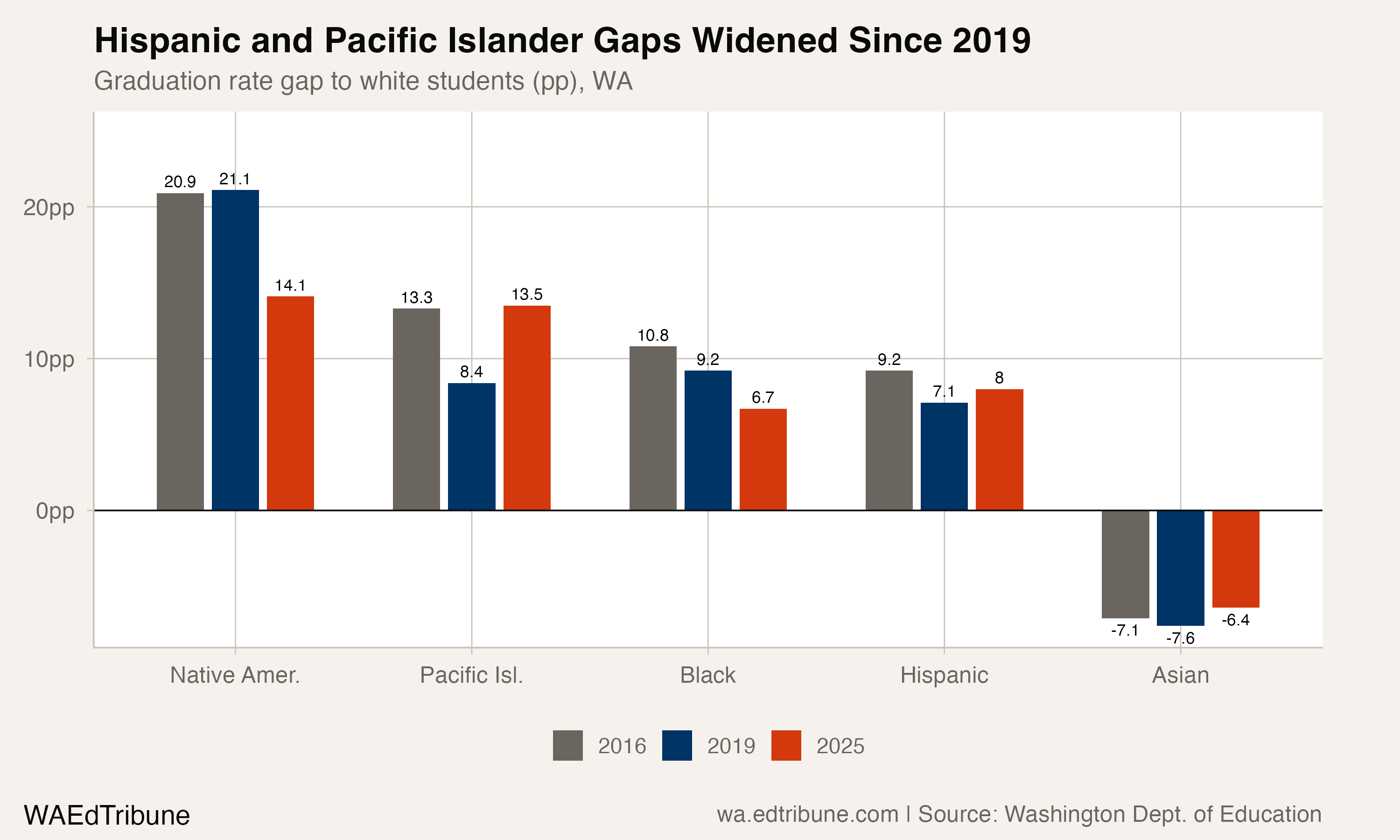
After narrowing for most of a decade, the white-Hispanic graduation gap widened 3.7 points in three years. A growing cohort makes the stall costlier.
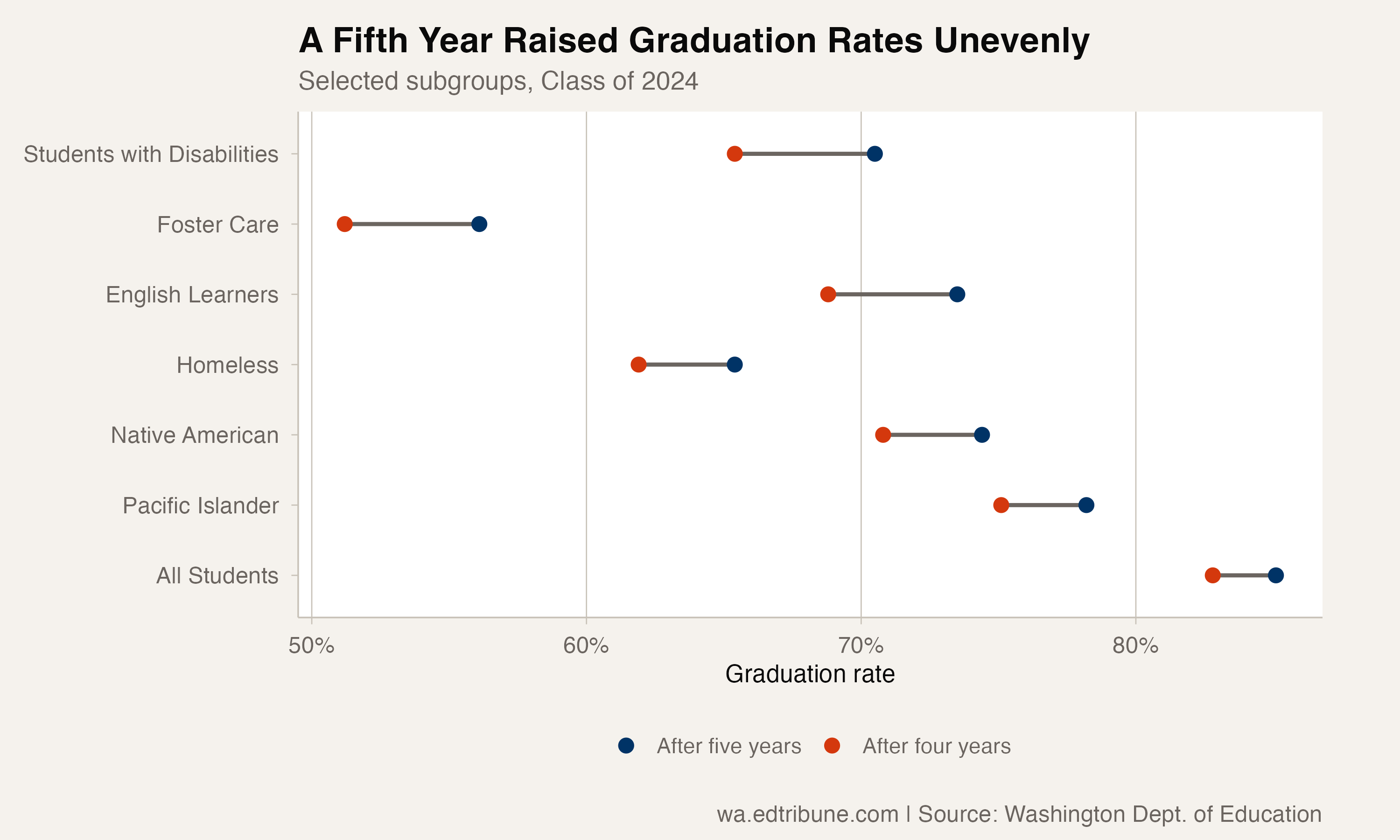
Washington's Class of 2024 graduation rate rose from 82.8% after four years to 85.1% after five, with larger gains for students with disabilities, foster students, and English learners.
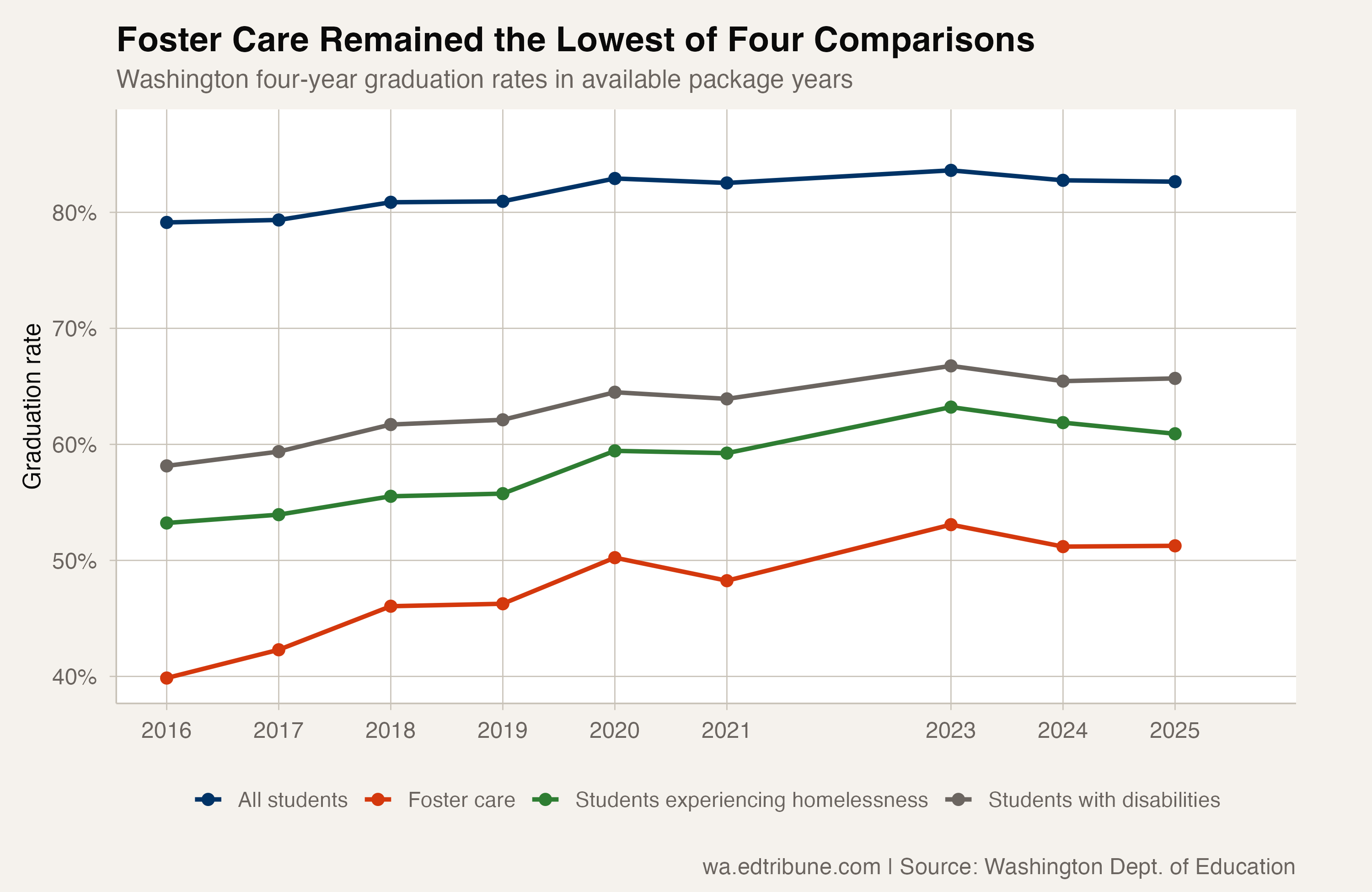
Washington's foster-care four-year graduation rate was 51.3% in 2025, 31.4 percentage points below the all-student rate.
Sixteen Washington school districts with at least 500 students moved from chronic-absence rates of at least 40% in 2022 to below 30% in 2025.
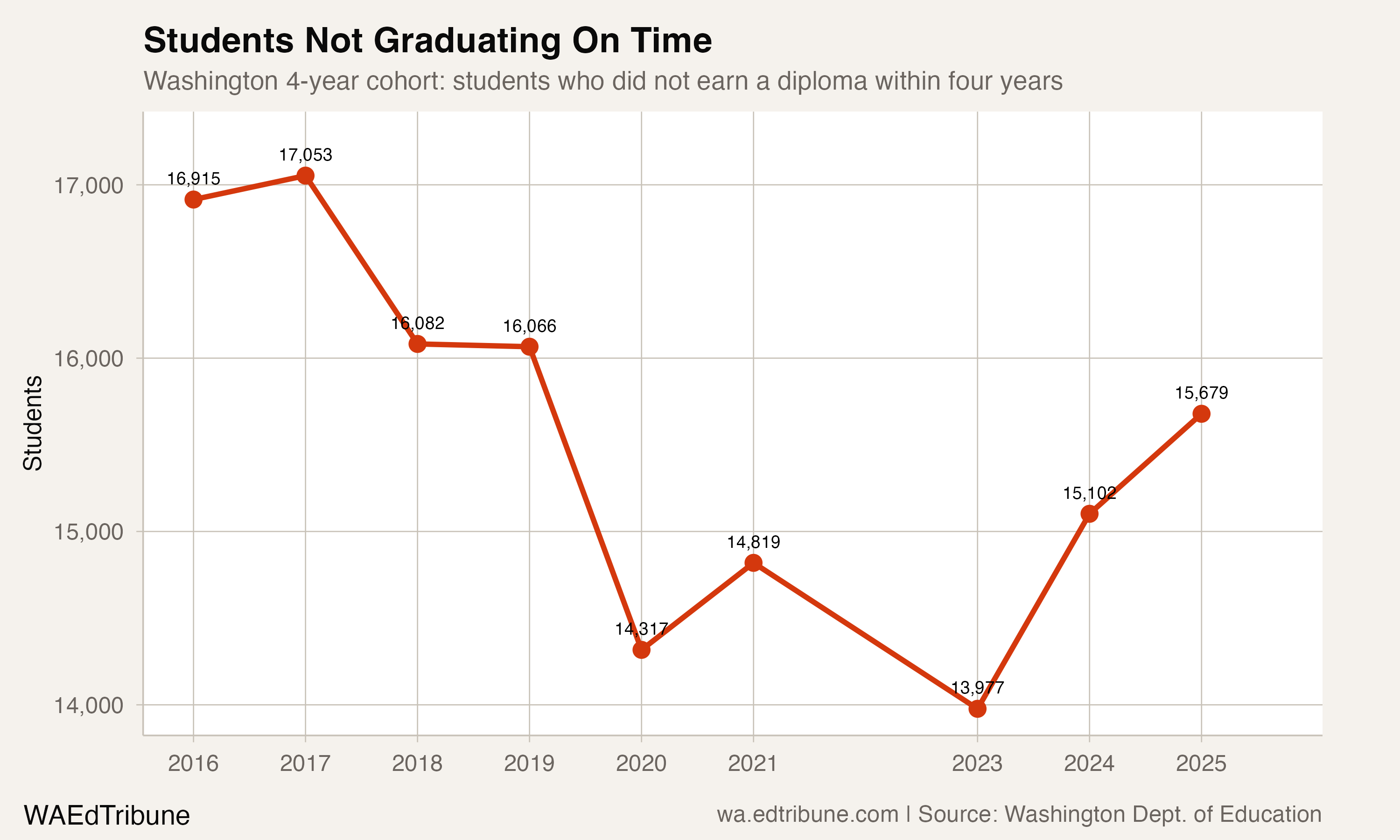
Washington produced record graduates in 2025, but the rate fell for the second straight year as the cohort grew faster than the diploma count.
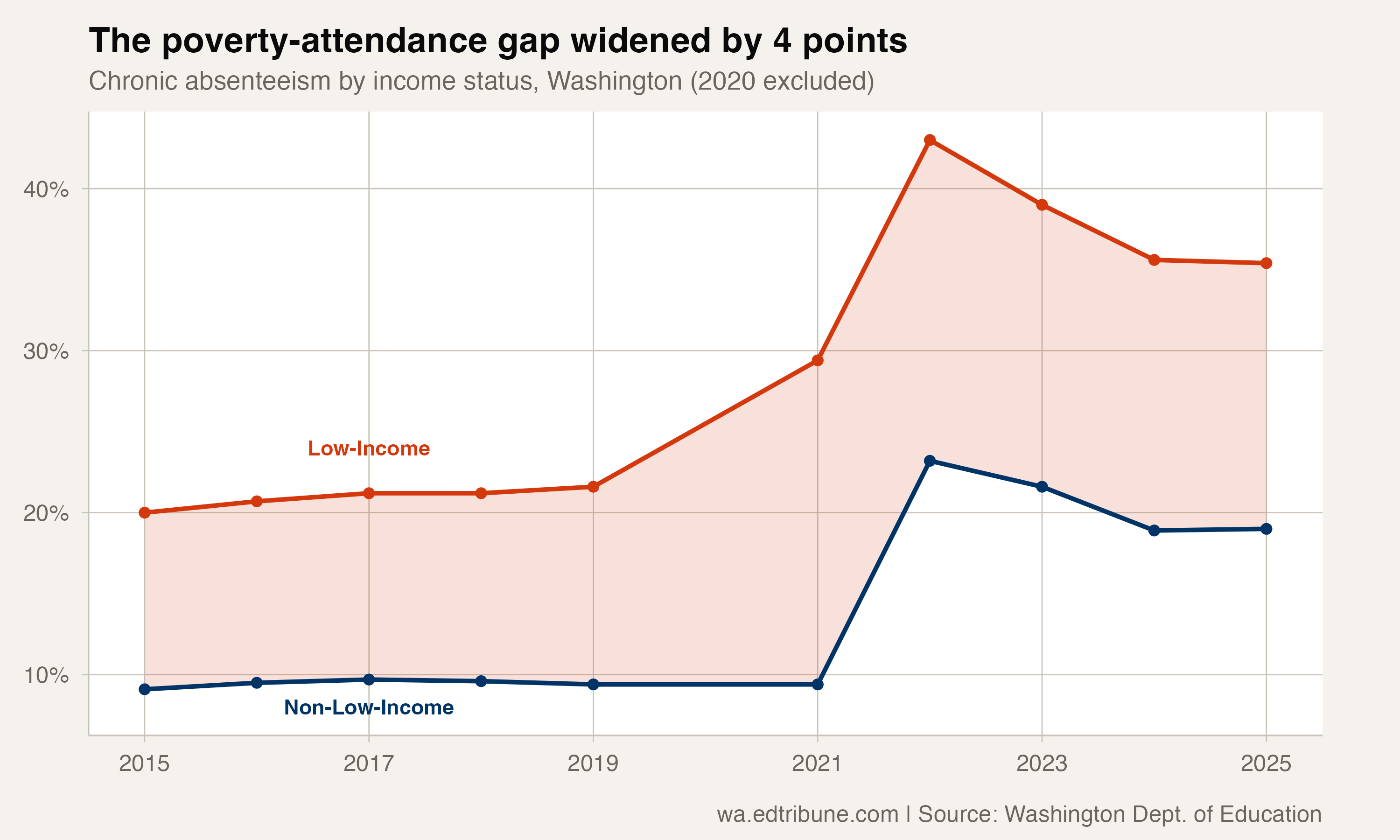
In 2024-25, 35.4% of Washington's low-income students were chronically absent vs. 19.2% of their peers, a 16.2-point gap that has grown by a third since before the pandemic.