In Washington's 2024-25 four-year graduation cohort, 3,510 students classified as English learners did not graduate within four years. In 2015-16, the corresponding count was 1,954 — an increase of 1,556 students, or 79.6%.
Direct evidence: The figures come from Washington's published four-year adjusted cohort graduation rows. The published series omits end year 2022; the analysis does not fill that gap.
The reversal
The English-learner graduation rate rose from 57.6% in 2015-16 to a series peak of 70.7% in 2022-23. It then fell to 68.8% in 2023-24 and 67.5% in 2024-25 — a 3.2-point decline from the peak.
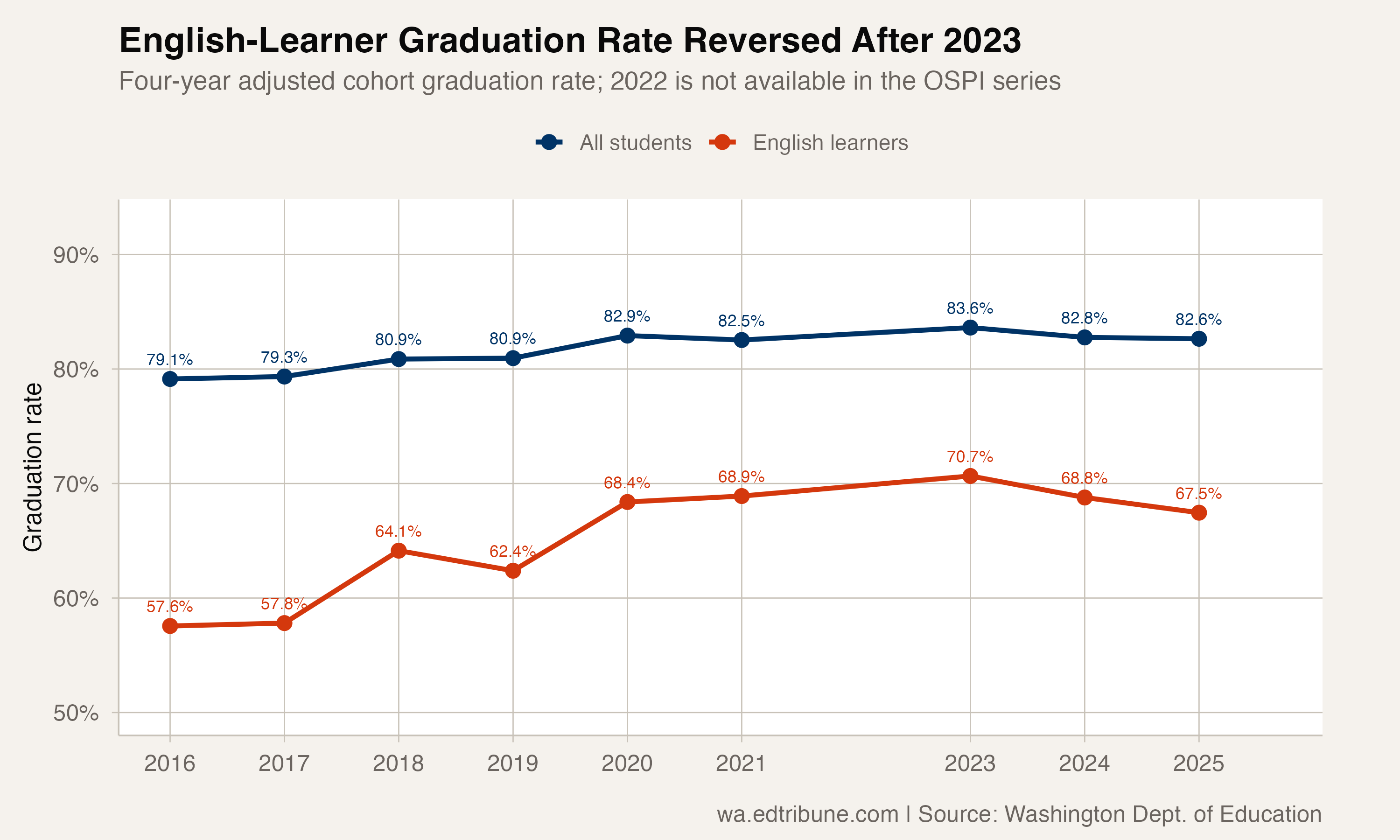
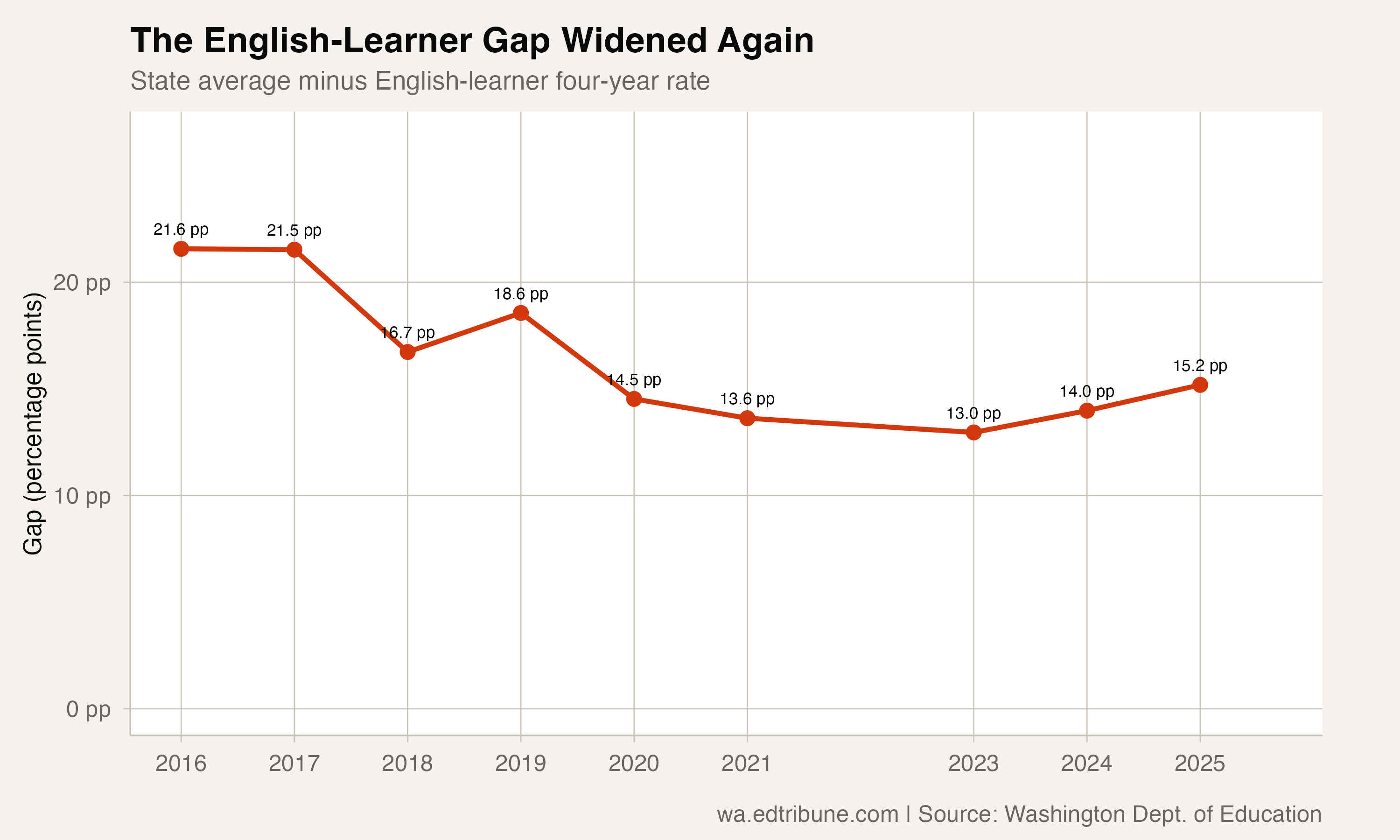
The statewide four-year rate for all students was 83.6% in 2022-23 and 82.6% in 2024-25. The gap between the state average and the English-learner rate widened from 13.0 points to 15.2 points over those two published years. The gap was 21.6 points in 2015-16.
The rate series describes the result, not its cause. These rows do not identify whether changes reflect student composition, classification, program capacity, reporting practices or another mechanism.
A cohort more than twice as large
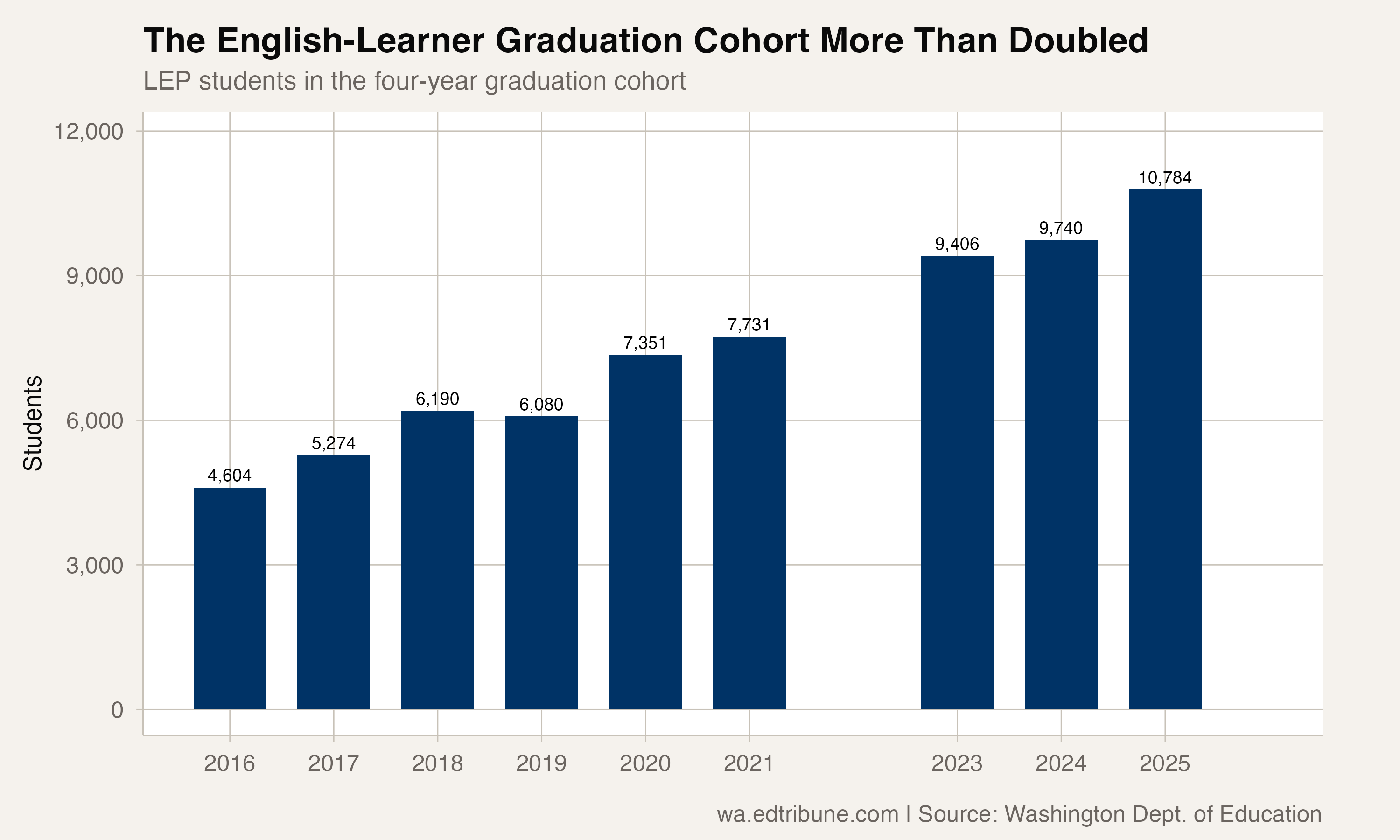
The English-learner cohort grew from 4,604 students in 2015-16 to 10,784 in 2024-25, a 134.2% increase. Over the same period, the statewide four-year cohort grew 11.4%, from 81,041 to 90,315 students.
English learners made up 5.7% of the statewide four-year cohort in 2015-16 and 11.9% in 2024-25. The changing cohort is essential context for the rate trend, but the graduation rows do not separate arrival timing, reclassification or other composition changes.
The fifth year
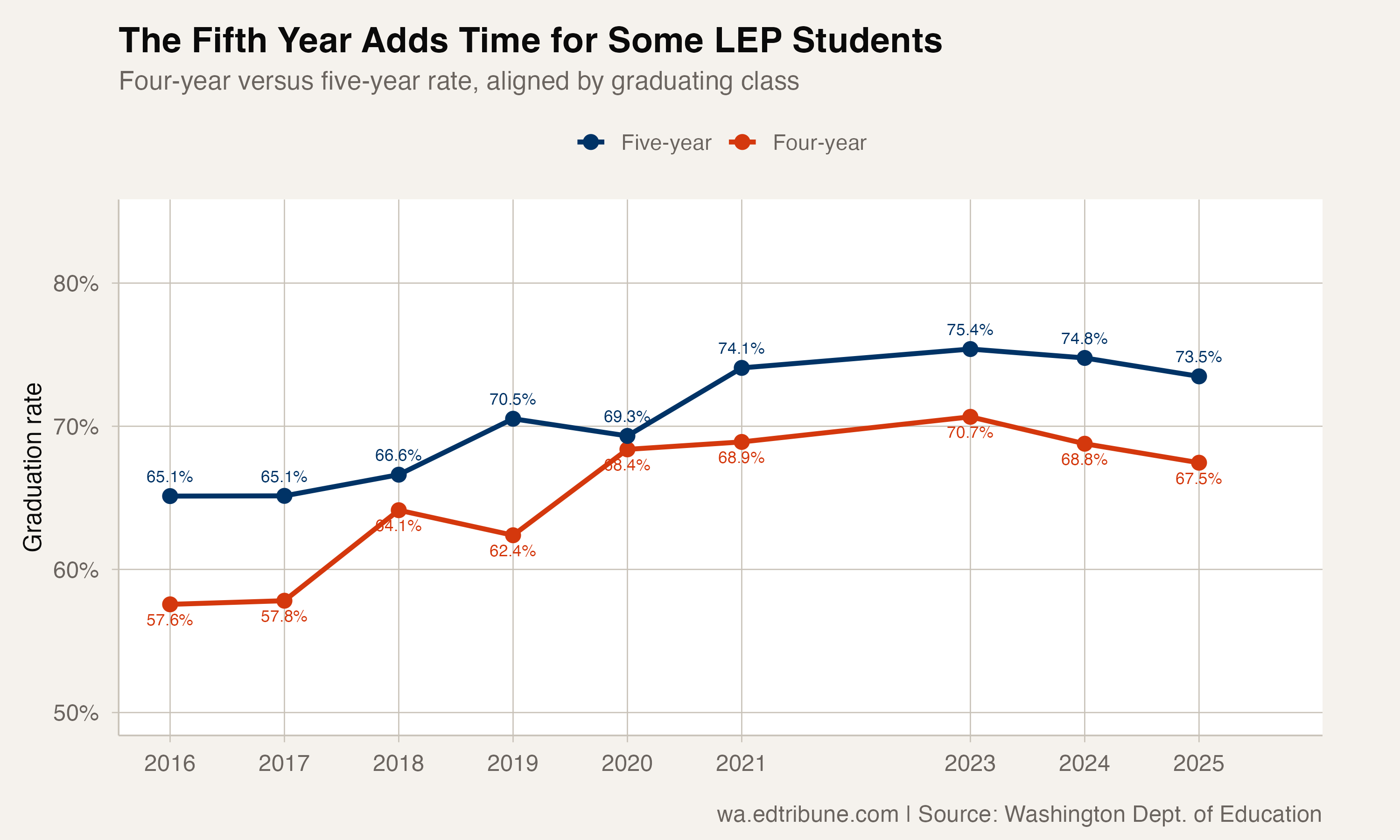
For the 2022-23 graduating class, the five-year English-learner rate was 75.4%, 4.7 points above the four-year rate. For 2024-25, the five-year rate was 73.5%, 6.0 points above the four-year rate. The comparisons are aligned by end year; they are not comparisons of different graduating classes.
The additional year changes the measured outcome for some students, but these data do not establish why the lift differs across years.
Unresourced: This package shows published graduation outcomes and cohort counts. It does not identify the mechanisms behind the 2023-2025 decline or predict the next cohort's rate.
Data from the Washington Office of Superintendent of Public Instruction. Analysis covers available end years 2016-2021 and 2023-2025; rates are four-year or five-year adjusted cohort graduation rates as labeled.
Detailed code that reproduces the analysis and figures in this article is available exclusively to EdTribune subscribers.
Discussion
Sign in to join the discussion.
Loading comments...